
A strong law firm website does more than look professional. Every page, piece of content, and design decision should help visitors understand your services, build trust in your firm, and feel confident taking the next step. Here’s what matters:
- Build your website around a clear structure with intuitive navigation, accessible design, and content that speaks to real people rather than search engines or other attorneys.
- Create essential pages that each serve a distinct purpose, including a homepage, practice area pages, attorney profiles, resource pages, and a contact page.
- Make it easy for visitors to determine whether you can help, why they should trust your firm, and how to contact you within seconds of arriving on your website.
- Answer the questions potential clients are actively searching for and use your content to reduce uncertainty, demonstrate your experience, and encourage qualified leads to reach out.
Most lawyers already understand that having a professional website is important for finding new clients. While having a polished website helps make an impression, appearance alone is unlikely to convince visitors to take that critical step toward filling out a contact form or scheduling a consultation. Plenty of other law firm websites are visually appealing.
What actually sets a personal injury, workers’ compensation, or SSDI website apart is the strategy behind it. Every decision, from the pages included to the information provided to the way those details are presented, needs to serve a purpose. Your website needs to accomplish two main things: inform potential clients and get them to convert by taking the next step. If your website is failing on either of those fronts, it’s simply not working as intended.
Building a law firm website that makes it easy for visitors to ascertain if you can help them, why they should trust your firm, and what they should do next demands strategic thinking behind every page, piece of content, and design element.
Law Firm Website Best Practices
Before thinking about individual pages, consider some of the foundational elements that influence a website. How a site is structured, organized, and designed directly affects how visitors find information, learn about your services, and (ideally) convert.
Establish a Clear Site Structure
Your website needs to communicate a lot of information: practice areas, attorney experience, case results, answers to common questions, and ultimately why someone should consider your firm. Good legal websites have an intentional structure where each page has a defined purpose, and the information throughout the site feels organized and cohesive. Visitors won’t spend time scouring through a cluttered or outdated website to find information when plenty of other simpler options are only a couple of clicks away.
Design for an Intuitive User Experience
Your website needs to look good, but how it looks is far less important than how the site functions. Design is central to both aesthetics and usability. Each visual element plays a role in guiding visitors through the site, helping them take in information and take action. Clean layouts, consistent branding, thoughtful use of color, and strong visual hierarchy all contribute to a user experience that feels natural.
Prioritize Accessibility for Site Visitors
For many law firms, accessibility is more than just a technical consideration. Clients seeking representation for Social Security Disability, workers’ compensation, or personal injury matters may be recovering from serious injuries, managing long-term disabilities, or experiencing vision, hearing, or mobility impairments. If your website is difficult to navigate or read, you’re creating obstacles impacting a major segment of your clientele. Responsive design, readable typography, sufficient color contrast, keyboard accessibility, descriptive alternative text, and other accessibility best practices help ensure every visitor can access the information they need.
Write Content for Real People
There are countless law firms offering the same legal services, and they all have websites. One of the most effective ways to stand apart is through the way you communicate. People visit your website because they have questions and are looking for answers. While legal terminology may be second nature to you, many visitors are unfamiliar with the legal system and simply want to understand whether you can help. Using clear, conversational language instead of unnecessary legal jargon makes your content easier to understand and more approachable.
Just as importantly, your content should acknowledge what potential clients are experiencing. Whether someone has been seriously injured in an accident, denied Social Security Disability benefits, or hurt on the job, they are often dealing with uncertainty, financial hardship, physical pain, and emotional stress. Content for lawyer websites should demonstrate that your firm understands those challenges and is prepared to help guide them through the legal process.
Essential Pages Every Law Firm Website Needs
Every page on your website has a specific job to do. While the exact structure of a website will vary from firm to firm, there are several core pages you’ll want to include.
Homepage
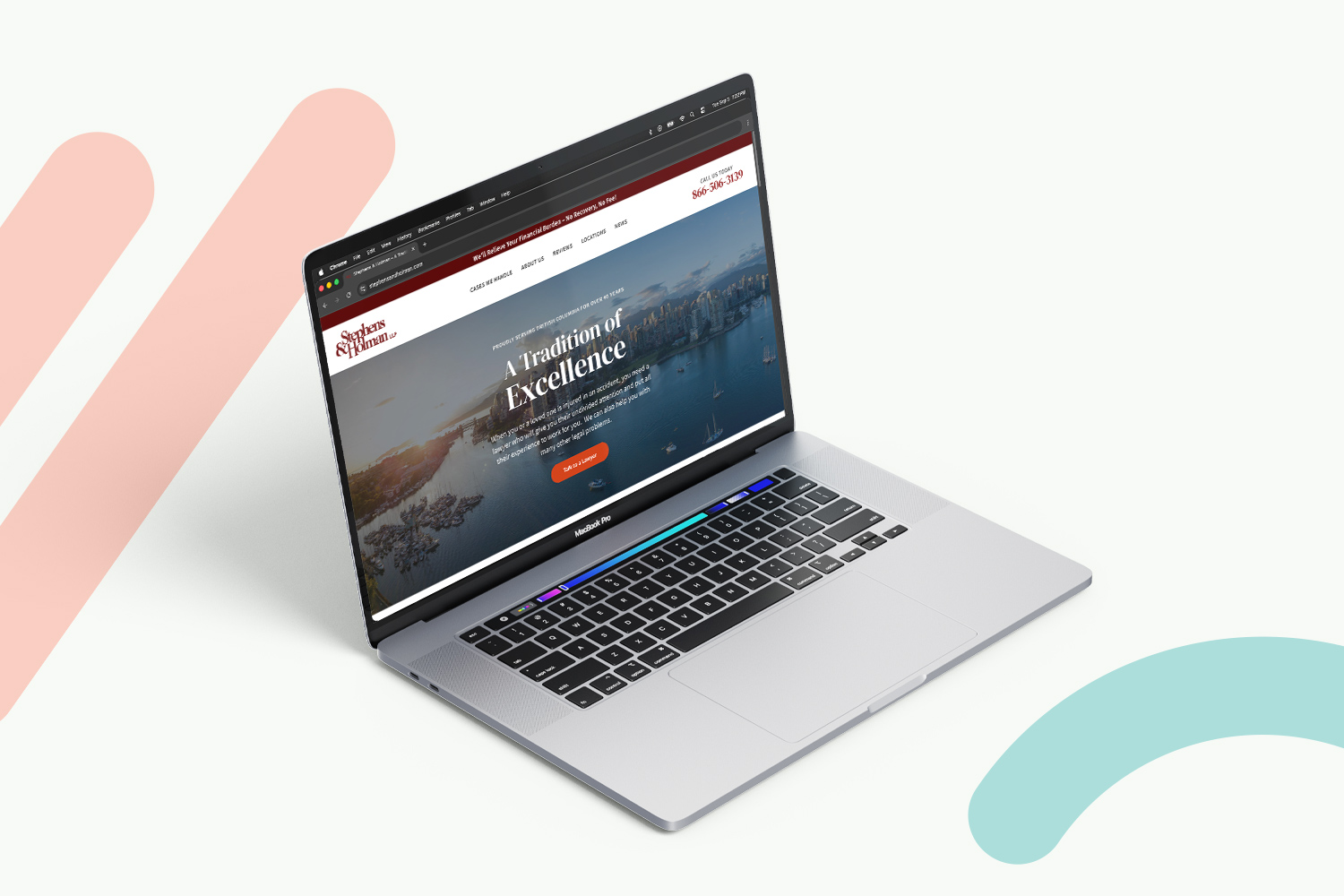
There’s a good chance your homepage is the first interaction someone will have with your firm. Within seconds, visitors must be able to determine whether they’re in the right place; your homepage should say what types of cases you handle, what sets your firm apart, and how to get help.
The most important information on your homepage is best placed “above the fold,” or the portion of the page visible before someone starts scrolling (whether on a desktop or mobile device). This includes your firm’s name and logo, a clear headline explaining who you help and how, a prominent phone number, and a primary call to action. Make it immediately clear why someone has landed on your website and what they should do next.
Beyond the initial impression, your homepage should provide a concise overview of your firm while directing visitors to more detailed information throughout the rest of the website. Briefly introduce your primary practice areas, explain your fee structure or free consultation policy if applicable, and provide a simple overview of what clients can expect after reaching out. Throughout the page, incorporate trust-building elements like client reviews, case results, attorney photography, and third-party recognitions in a way that complements the design and reinforces credibility without overwhelming visitors.
Practice Area Pages
Individual practice area pages are the place to go more in depth on a specific legal need. Each page should clearly explain the kinds of cases you take on, the nuanced challenges and feelings potential clients face, and how your firm approaches those matters. Content should be written in a way that helps visitors understand whether your services align with their needs while avoiding overly technical legal language that may create confusion.
Strong practice area pages also consider how information is presented. Long walls of text make important details difficult to find. Use clear headings, concise sections, and visual elements to organize information. Sometimes having subpages for niche case types or legal issues may also be beneficial. For example, a personal injury practice page may include separate pages for more details concerning car accident, slip and fall, or medical malpractice cases.
About Page
An about page and attorney profile pages provide an opportunity to introduce the people behind your firm, elaborate on your processes, and give visitors a better understanding of who they may be trusting with their legal matter. This is also the place to share information about attorneys working at the firm, including their qualifications and experience.
Design choices are equally important for these pages. Professional photography of the actual attorneys and staff is far more effective than generic stock images because potential clients want to see the people who will be working on their case. A consistent layout, clear organization, and approachable tone help these pages feel personal and reinforce the credibility of the firm as a whole.
Resource Pages
Blogs and FAQs pages give you the opportunity to offer helpful information. Potential clients often conduct research before committing to an attorney. Searchers may not yet understand what options are available to them or whether they have a valid claim, or feel ready to contact a lawyer.
Rather than creating content for the sake of publishing something new, focus on answering the questions people are actively asking and searching for. Consider the concerns, misconceptions, and uncertainties potential clients have throughout their legal journey, then create resources that provide clear, straightforward answers.
Contact Page
By the time someone reaches your contact page, they’ve likely already decided your firm is worth considering. Traditional contact forms are only one option. Eligibility quizzes can also be an effective way to engage potential clients who may still be uncertain whether they have a valid case or qualify for legal representation. By asking a series of straightforward questions, these tools help visitors better understand their situation while allowing your firm to gather useful information before the initial consultation.
Partner with Better Cases
At Better Cases, we understand that an effective law firm website requires more than great design. Our team combines strategic website development with thoughtful, client-focused content to help law firms build credibility, improve user experience, and generate more qualified leads. If you’re ready to strengthen your online presence, we’re here to help.
Get support that fits your firm’s marketing needs.
We’ll help you review what’s working, clarify what you want to improve, and create simple next steps that guide your marketing toward meaningful outcomes.

Chris Reilley – Founder
Chris founded Better Cases after years of helping attorneys adapt their marketing to a changing landscape at his first digital marketing agency, Parkway Digital. His experience showed what worked, what didn’t, and what firms actually needed. His approach prioritizes strategy, efficiency, and results that help law firms.